Last updated: 6 October 2026 · Remedies Beauty Editorial
Quick answer: Spicule skincare uses microscopic needle-shaped particles, often from marine sponges or silica, suspended in a serum. Massaged into the skin, they create a temporary prickly, tingling sensation in its outer layer. They are a cosmetic texture product, not a substitute for clinic microneedling, and suit resilient skin better than sensitive skin.
Korean "reedle shot" and spicule serums have become one of the most talked-about K-beauty categories of 2026, alongside dissolving microneedle patches and, more controversially, home derma rollers and stamps. This guide is deliberately cautious. It explains what each type of product is, who should skip them, and how to try a spicule serum gently if your skin is suited to it.
What spicules are, and what the research says
Spicules are tiny structural particles found in marine sponges. In skincare, purified sponge spicules (or silica particles designed to behave similarly) are mixed into a serum. When you massage the serum in, the particles lodge briefly in the outermost layer of skin, which is why it tingles or feels like fine sandpaper for a while.
Laboratory studies on sponge spicules, such as this 2017 study on skin delivery using marine sponge spicules, report that they can create many tiny temporary channels in the outer skin layer. That research was carried out under laboratory conditions; it does not tell us how a particular cosmetic will perform on your face, and it is a reason to use these products carefully rather than more often.
Three types of "at-home microneedling" product
| Type | How it works | Who applies it | Our view |
|---|---|---|---|
| Spicule serums ("reedle shot", "liquid microneedle") | Microscopic particles in a serum, massaged in by hand | You, at home | Can suit resilient skin if introduced slowly; avoid on sensitive or broken skin |
| Dissolving microneedle patches | Patches with tiny cones made of ingredients such as hyaluronic acid that dissolve after application | You, at home | Targeted and single-use; follow timings and do not reuse |
| Needle devices (derma rollers, stamps, pens) | Metal needles that physically puncture the skin | Should be a trained practitioner | We do not recommend these for home use |
In England, the government has set out plans for a licensing scheme for non-surgical cosmetic procedures, and microneedling is among the procedures expected to be covered. You can follow the background on the GOV.UK consultation page.
Products to compare (UK prices)
These are real spicule serums and dissolving patches from our catalogue. Spicule strength is usually described in ppm (parts per million) of spicules; a higher number generally means a more intense sensation, so start low. Prices were checked on 6 October 2026; the product cards at the end of the guide show current prices.
| Product | Type and size | Notes (brand claims) | Price |
|---|---|---|---|
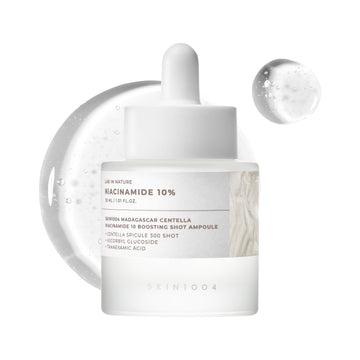
| SKIN1004 Niacinamide 10% Boosting Shot Ampoule | Serum, 30 ml | Micro-spicules with 10% niacinamide | £20.99 |
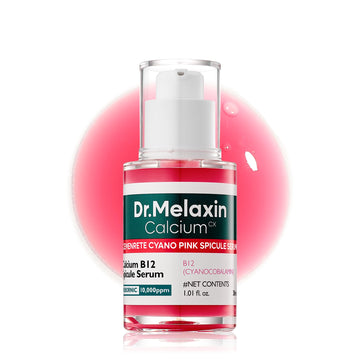
| Dr.Melaxin Cyano Pink Spicule Serum | Serum, 1.01 fl oz (30 ml) | Spicules with niacinamide and hyaluronic acid | £28.15 |
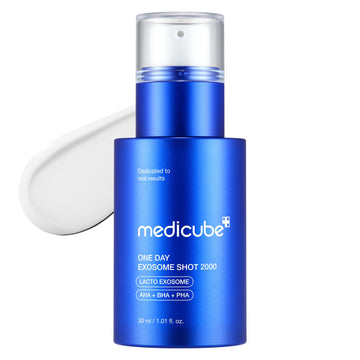
| medicube Exosome Shot Zero 2,000 PPM | Serum, 1.01 fl oz (30 ml) | Lower-strength spicules; also contains AHA/BHA/PHA, so do not pair with other acids | £32.01 |
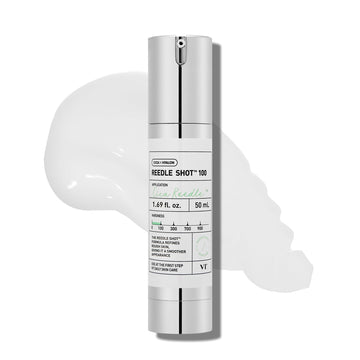
| VT COSMETICS Reedle Shot 100 | Serum, 50 ml | Entry level of the Reedle Shot range, with cica | £36.02 |
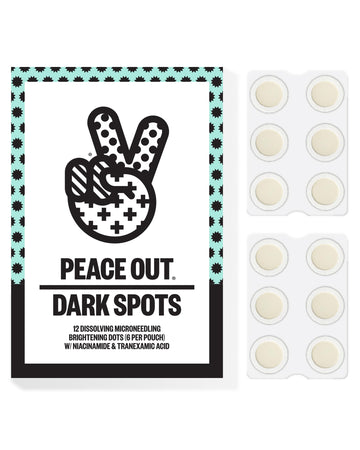
| PEACE OUT Microneedling Dots for Dark Spots | 12 dissolving patches | Targeted patches with niacinamide | £30.99 |
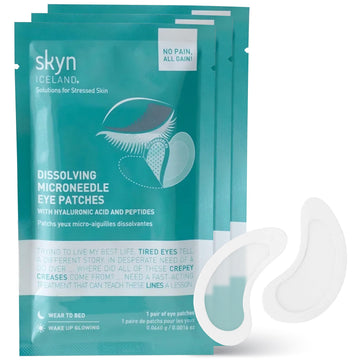
| skyn ICELAND Dissolving Microneedle Under-Eye Patches | 3 pairs | Hyaluronic acid and peptides, worn overnight | £59.49 |
Who should avoid spicule products
- People with sensitive, reactive or redness-prone skin, rosacea or eczema-prone skin.
- Anyone with broken skin, cuts, active infections, cold sores, or inflamed breakouts in the area.
- Skin that is already irritated from acids, retinoids, waxing, sunburn or a recent clinic treatment.
- Anyone using prescription skin treatments, unless their prescriber has said it is fine.
If your skin is in a fragile phase, start with our winter skin barrier routine instead.
How to patch test (do this first)
- Apply a small amount of the serum to a 2 cm area on the side of the jaw or behind the ear.
- Massage gently for 10 to 20 seconds, then leave it on as the brand directs.
- Check the area after 24 and 48 hours. Mild, short-lived tingling is expected; burning, swelling, a rash or redness that lasts is a sign to stop.
How to use a spicule serum gently
- Evening only to start. Use after cleansing, on dry skin.
- Use less than you think. One or two pumps for the whole face, spread with light, circular movements. Do not scrub or press hard.
- Avoid delicate areas. Keep away from the eyes, lips, nostrils and any broken skin.
- Do not stack actives. On spicule nights, skip exfoliating acids, scrubs and retinoids.
- Follow with a calm moisturiser. A fragrance-free ceramide cream helps your skin feel comfortable.
- Protect in the morning. Wear daily sun protection, as freshly exfoliated skin can be more sensitive to the sun.
- Build slowly. Stay at once or twice a week for two to three weeks before considering more.
- Stop if skin objects. Persistent stinging, redness or flaking means stop and return to a basic routine.
Using dissolving microneedle patches
- Cleanse and dry the area completely.
- Apply the patch with clean fingers and press for a few seconds so the tiny cones make contact.
- Leave it on for the time stated by the brand, often overnight, then peel off and discard. Never reuse a patch.
- Do not apply over broken skin or open spots.
Many spicule serums are also sold as PDRN or "glass skin" boosters. Our guide to PDRN vs PN and polynucleotides explains those terms, and how to layer skincare actives covers which products not to mix.
Frequently asked questions
What are spicules in skincare?
Spicules are microscopic, needle-shaped particles, traditionally from marine sponges and in some products made of silica. Suspended in a serum and massaged in, they create a prickly, tingling sensation in the skin's outer layer. Laboratory research on sponge spicules reports that they can create tiny temporary channels in the outer skin layer.
Is a spicule serum the same as microneedling?
No. Clinic microneedling uses a sterile device with fine needles and is carried out by a practitioner. A spicule serum is a cosmetic applied by hand. It can feel prickly, but it is not a substitute for a professional treatment and should not be marketed or used as one.
Should I use a spicule serum if I have sensitive skin or rosacea?
It is best to avoid spicule serums if your skin is sensitive, reactive, redness-prone, eczema-prone or broken. Choose a gentle, fragrance-free routine instead, and speak to a pharmacist or GP if your skin is persistently red or irritated.
How often should I use a spicule serum?
Start with once or twice a week in the evening, using a small amount and light pressure. If your skin tolerates it after two to three weeks, you can increase slowly, but do not use it on the same night as exfoliating acids or retinoids.
Are derma rollers and microneedling pens safe to use at home?
We do not recommend home needling devices. Reusing needles, poor sterilisation and pressing too hard can damage skin and cause infection. In England, microneedling is among the procedures expected to fall under the government's planned licensing scheme for non-surgical cosmetic procedures.
Sources
- PubMed: Skin delivery of hydrophilic biomacromolecules using marine sponge spicules (2017)
- GOV.UK: licensing of non-surgical cosmetic procedures
Shop the edit
Browse Spicule & microneedle skincare, eye masks & patches, pore care, VT Cosmetics and skin barrier repair. Every order includes free UK delivery and 30-day returns on unopened items.